Saturday, February 9, 2013

The Hobbit: An Unexpected Journey


I went into this film some weeks after its initial release and was informed of its content from a plethora of different sources. The general sentiment that I received was that it was good, great, fantastic, but with no qualification in regards to why it was good. The dissenting opinions, on the other hand, made it perfectly clear to me why they thought that it was bad. While this very amateur film critic leans ultimately towards the former perspective, we will nevertheless pay just as much attention to what was unnecessary, trite, absurd, or just downright awful about The Hobbit: An Unexpected Journey.

The very first thing that the viewer should realize when seeing this film is that it is not the same film as any of the Rings trilogy are; the original vision of The Hobbit narrative is one based more on the typical ‘fairy tale’ (almost to the point of being a children’s story) than on the meatier, darker, and altogether more seriously mythical content that constitutes The Lord of the Rings saga. To this end, we have no problems with Jackson’s execution. Everything about An Unexpected Journey, from the black Anglo humour of the three trolls to the slightly more whimsical Gandalf to the sonorous cleaning routine of a dozen raucous dwarves, tells us that this is a very different, a very much more playful, light-hearted sort of story than that which featured the deep gravity of uncertain kings and stubborn stewards.


As convincing as this moderate change of focus turns out to be, it does raise an unfortunate tension. There are a number of scenes that depict brutal, intensely realistic (in the technological sense) battles mirroring the savagery of the original trilogy; there is very little difference between these action sequences and those of The Lord of the Rings, except for the ways in which they end. In An Unexpected Journey, our heroes unfailingly emerge from every conflict, every impossible entanglement unharmed. Now, this could very well be explained by the fact that, as a more fairy tale oriented story, and as they are only following Tolkien’s outline, the company can be excused this fantastic imperviousness to mortal injury, even if the scenes are more or less identical in their portrayal to those of The Fellowship of the Ring - it was Tolkien, after all, who stabbed Frodo with a Morgul blade, threw Gandalf from the bridge of Khazad-dum, and mercilessly slew Boromir at the very moment of his redemption, all the while saving Thorin and co. from so much as a flesh wound. Indeed, during the film, as with the book, between splitting rocks, finding holes in the ground, and generally just showing up out of nowhere, I could not help but mentally alter the common phrase to Gandalf ex machina - such was the extent of the grey wizard’s salvific influence.

The problem, then, lies not so much with the source material, but in the way that it was implemented, most notably with Bilbo killing a warg, and later rushing to slay an orc and rescue Thorin thereby, despite acting throughout the film as though he had never before held a blade suited for more than slicing his dinner. That entire closing scene with the wargs and the ‘pale orc’ seemed to bear the burden of being the climax; that is to say, the director’s crew dressed it up, with dwarves nearly falling off the cliff, and then sprinting to attack the wargs, and then more falling off cliffs, merely with the view of creating another Amon Hen, when really a standoff, a cold stare between Thorin and his nemesis would have been, if less climactic, quite sufficient in itself.

This brings us to another complaint that I have heard, which is that there is a massive amount of seemingly new material added to the story, not least of which is this sanguine rivalry between some defiler orc and Thorin Oakenshield. While many could do without him entirely, I understand the role that the pale orc plays, which is to illuminate more of Thorin’s character, who is a much more prominent figure here than in the book; this is a good thing firstly because the film-makers do not satisfy the whole of Bilbo’s character, and secondly because the entire journey is built off of his personal vendettas and obligations. So, while he does offer a darker alternative to the fat, jolly old goblin king, the pale orc is necessary for deeper reasons, namely, to bring out the connection Thorin has to his forefathers, strengthening the roles that familial honour and the duties to one’s homeland play in the film. 


A film character who is entirely unnecessary, however, is Radagast the Brown, an ugly, hippy mage who succumbed to the stewardship of birds and rodents and all the other small creatures of the forest instead of keeping to his true wizardly vocation. The scene with the ghastly necromancer could have been fulfilled by a more minor character or by Gandalf himself while he was away the first time, perhaps, but the scene where he is driving his rabbit sleigh away from the wargs is simply ridiculous; besides being absurd from the very idea of it, Radagast is also a singularly horrible driver, leading the beasts straight to Thorin and the rest three or four times at least. Finally, the sheer logistics of his part is very questionable indeed if we simply consider the distance, the leagues between the point where Radagast meets Gandalf, the location of Dol Guldur, and the timing of the two events.


In The Hobbit text, Bilbo is the only member of the party who experiences serious character development from start to finish; his is meant to be the point of view which best relates to the typical modern reader estranged from the world of fantasy and high adventure.  As Bilbo steps out his front door, as he takes the long road and encounters all sorts of strange and exciting things, so do we, familiarizing ourselves with Middle-earth vicariously through this oddly bourgeois creature. At the beginning, Bilbo is thoroughly unacquainted with the world at large, thinking that Gandalf, for example, is merely some wandering trickster with delightful fireworks, not a mysteriously powerful wizard who has come with the decisive aim to turn the hobbit’s comfortable life into a very uncomfortable one. The film does a manageable job of illustrating this crisis, this crucial meeting point of Bilbo’s old life and the one he is about to begin; we clearly understand the attraction of his simple, easy life and his desire to keep it, but we also are made to perceive that there is more to life than fending off nosy neighbors and being home in time for dinner. Gandalf has come to relieve Bilbo of his routines and habits in order to draw out some of his higher, more heroic qualities (‘When did doilies and your mother’s dishes become so important to you?’).

Now, while the kindly wizard has indeed come to shake the bourgeois out of Bilbo’s life, he does not mean for it to stay out, for all of his cozy domesticity and distinct comforts to vanish and be gone forever. There is this one scene while the company is at Rivendell, and Gandalf, in defense of his choice to bring an apparently lowly hobbit along, says, ‘Saruman believes only great power can hold evil in check, but that is not what I have found. I found that it is the small deeds of ordinary folk that keep the darkness at bay’. There is a definite Chestertonian presence felt in these words, which mean that it is the persistence of every-day activity and the simple acts of ‘love and kindness’ of ordinary individuals that serves to ‘keep the darkness at bay’; it is as though the very average Bilbo represents the ideas of homeland and peaceful normalcy to keep the candle alight, to remind both his fellow companions and the viewers of what they are campaigning for in the face of all the terrors that the road might bring them. There is a Chesterton quote that applies here: ‘The true soldier fights not because he hates what is in front of him, but because he loves what is behind him.’ Bilbo tells us that he misses his books, that he often thinks of home, but he keeps going any way, not only because he is beginning to like the adventure, but because he wants Thorin and his people to have the same things that he has, namely, consistently good food, perpetual security, and a place to call home.

What I do find problematic about An Unexpected Journey is that there was generally too much activity going on. Aside from the time spent in Bilbo’s hole-in-the-ground and their all-too-brief rest in Rivendell (my personal favourite segments of the film), there was virtually continuous action; from battling trolls to enduring the impetuous whims of stone giants to running up trees there was hardly a moment to spare for reflection and strong, revealing dialogue. Yes, we received the history of Thorin, and yes, we hear a lot of foreshadowing about this necromancer of Dol Guldur, but there was not nearly enough time spent towards the art of conversation, of capturing the real thoughts of the hobbit protagonist, which is additionally disappointing considering how wonderfully, how charmingly he is portrayed by Martin Freeman. The exchange between himself and the Gollum creature is another highlight of the film, but it does not quite touch on the hobbit’s actual nature until, building off of a dominant theme of The Lord of the Rings, he shows him mercy and, according to Gandalf, reveals the ‘truer courage’. This, however, is again done through action, without any thoughtful consideration that might have offered us a more profound insight into the event.


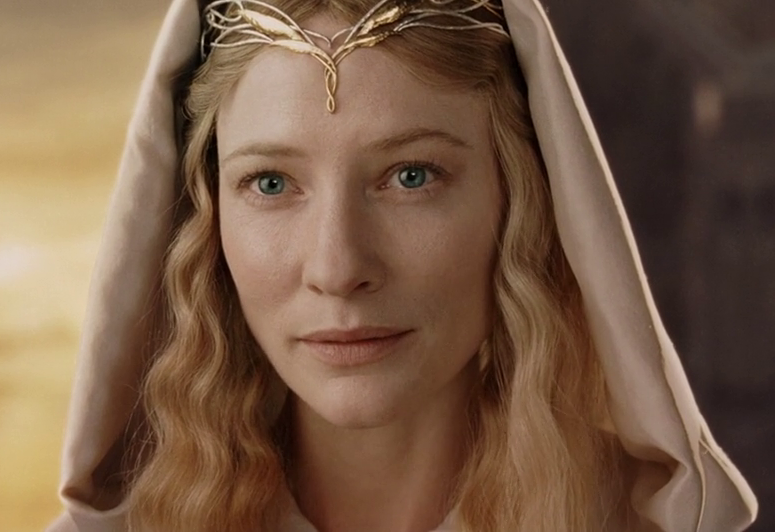
A further complaint is with the overall cinematography, with the ‘world-making’ of Middle-earth. Whereas the Rings trilogy presented this amazing, awesome, and thoroughly otherworldly environment that left us without a doubt as to this place’s factual existence, An Unexpected Journey does not quite capture the same level of realism; there is something missing in the structure – it is as though they relied on the strength of precursor films to carry this film as well, unwilling or unable to contribute something more to this adaptation to make it uniquely  ‘Hobbit-esque’. This is highly unfortunate because, while The Lord of the Rings had this elaborate, epic superstructure underlying the narrative, enforcing every activity, every conversation with a powerful realness, An Unexpected Journey lacks the same immense atmospheric strength, which only leaves us doubting every occurrence, remembering all the while that, yeah, this is just a fairy tale after all. I will remark that certain things, like the Eden-like peace of Rivendell, the seemingly supernatural beauty of Galadriel, the obligatory top-of-the-mountain travel montage with the heroic dwarven refrain ringing out, even the CGI (usually a more unfortunate element of this film) of the three trolls were excellent accomplishments; these were things that were closest to the sublime grandeur, the ‘fantastic realism’ of the original trilogy.

Speaking of the music, we are in two minds in regard to the overall quality of the soundtrack. On the one hand, the score was too dependent on those of the three prior films, unwilling for the most part (as with the cinematography) to endeavour into new territory, to breach new motifs. One part that I found particularly distasteful was when Thorin rushed the pale orc near the end of the movie and we hear the eerie, serenely angelic theme from the song ‘Isengard Unleashed’ when the Ents rose up to conquer the masters of industry; in The Two Towers it was a moment that actually moved me to tears, such was its triumphant power and precise artistic feeling, but when Thorin attacked the orc it was a cheap imitation, especially treacherous to me considering the fact that he was utterly humiliated by his opponent. On the other hand, the Dwarf motif was really strong, majestic, exactly what we would expect from a company of hard, earthen comrades led by royalty; I had shivers coursing down my back when they first sung their hymn in Bilbo’s home. I can certainly see why they relied so heavily on their original score – it suits Middle-earth, and is simply a brilliant piece of music (one of the best in film history). So if they would have just created a new dramatic motif for Thorin, or at least for his climactic moment, and perhaps concentrated a bit more on original material for the rest, I would really have no serious complaints at all about the music.

I went into this film knowing that I would enjoy it enormously; such is the firmness of the grasp that Tolkien’s ‘legendarium’ has on my imagination, and such is my confidence in Peter Jackson and his own minions. I was not wrong, not in the slightest, and that is firstly because I am indeed so fascinated by this mythical cosmos that anything that explores it with even the faintest touch of an artist meets my expectations; secondly because it is simply a good film – we must of course recall the magnificence of The Lord of the Rings in reviewing The Hobbit series, but we should hardly write off the latter simply because it falls short of the former, especially considering the fact that there were two largely divergent aims in each project. Thirdly, and most importantly, this work is badly needed for the overwhelming mechanization of today’s modern society; besieged by the media, swarming commercialization, meaningless occupations, and boring love lives, we crave for a higher order of ideas to elevate ourselves, to ameliorate whatever personal crises our industrial environment imposes on us and organize reality in a more intelligible way. As a worker of sublimely mythical art, J.R.R. Tolkien is unrivalled in the last hundred years; his grandiose poetry has opened up the imaginations of generations, allowing us to see greater aspects of life, of things seemingly more real than life itself. The arena of adventure, and the sort of heroism that calls for common goodness in the face of the harshest adversity, are totally relevant for the 21st Century man; he has only to enact them, to actively interpret these symbols in his own unique way to increase his livelihood thereby.

Contemporary culture is overrun by mindless bloodshed, spiritually and morally perverse sexual images, ‘heroes’ for whom currency is the highest goal, vanities of the most extreme – Tolkien’s work, even diluted through the medium of film, is an healthy escape from this collective disease, a deep breath of fresh air that clears the mind of irrelevant nonsense and enables the imagination to witness a sweeter state of being, if only for a couple hours at a time.


Thursday, February 7, 2013

Poetic Commentary: Sailing to Byzantium

'Sailing to Byzantium' ~ W.B. Yeats


http://www.online-literature.com/frost/781/


‘Sailing to Byzantium’ is the poetic result of a determined ambition to create a series of strong dichotomies that are all related to one another in a single principal: they all reflect the old philosophical, somewhat Gnostic dilemma of time versus the timeless. These dichotomies are pitted against each other, martially juxtaposed over the rich imagery and almost musical tone of the narrative: the physical world is but the terrestrial playground for the intelligible reality; the fundaments of human existence are the equivalent to those of animals if the precepts of intelligence are absent; and the denizens of time and space are hopelessly mired in the cycles of death and decay so long as the eternal soul lies beyond our grasp.


Yeats launches his assault upon the material cosmos with the weaponry of a Manichaean, striking down the supports of the purely natural world by pronouncing that their place in the universe is directionless, unjustified, and that the advocates and practitioners of such a path are condemned to a hollow life; the very emptiness of this state is its only utility since its very depravity has actually driven the speaker away in order to seek out broader and more authentic realms of being. Crying out for some kind of enlightenment or transcendence over his immediate conditions, the speaker beckons the sages, the muses, the whole pantheon of eternity to be the sole inhabitants of his consciousness to relieve himself of time’s great pressures; by overcoming his sensual aspect, and by merging himself entirely with the greater dimensions of pure intellect, the speaker has conceived that he will be finally released from the wrathful wailing, the tragic eulogies of ordinary life.

This prominent dualism exhibited by Yeats in ‘Sailing to Byzantium’ is as ambitious as it is wasteful. Although the speaker insightfully detects the a priori meaninglessness of physical, sensual reality, and how it is manifestly inferior to the direct and intelligible joys of the ‘holy reality’ above, he is keenly unaware of their positive and reconciled relationship. The full extent of his ignorance is evident in the imagining of a magnificent golden sculpture as the future host of his liberated, eternal spirit; he has effectively come from an abrasive iconoclasm of living images caught in the vicissitudes of this mortal sphere only to arrive at the feet of a great golden idol. In following his line of logic, the speaker has come to the contradictory conclusion that a splendid persistence in time is the most desired outcome, that only an immortal body could suit his immortal soul; the problem with this is that intellectual reality can and indeed must be at one with sensual reality; the problem with this is that God became man not to dilute his own substance, but so that men could become gods through the possibility of a divine body.


Wednesday, October 31, 2012

ANATHEMA - Weather Systems


'Death is not the opposite of life…. Death is the opposite of birth. Life is eternal.’ ~ Eckhart Tolle

If we understand We’re Here Because We’re Here to be an experiment in exploring life for the first time without being suffocated, existentially blinded by grief, loss, and a deeply personal ennui, Weather Systems is its sequel, its natural successor; Weather Systems represents the evolution of We’re Here… into the next stage. Having made way for a novel perspective full of joy and boundless energy, ready to discover the world anew, the old angst and expressions of emotional helplessness are either transmuted into a different kind of struggle, as we will explain below, or they are absolutely absent. Unlike many of the earlier albums, which dwelt on the pathetic strife of a man weary of the world and of existence itself, the purpose of Weather Systems is to portray the healing of that bitter soul, to portray his re-awakening into a universe which has at last captured his imagination, his youthful wonder, and simply his will to live.

The central dynamic in Weather Systems, which is elaborated further on this than on any one of their prior albums, must be the lyrical exchanges between the male and female vocals, each presumably representing a distinct ‘character’, as it were, since this record does play out very much like a kind of (mostly) non-linear drama. The male character, who is obviously the centre-piece of the narrative, is, in spite of his rejuvenated spirit and renewed thirst for life, still a man lost within himself; he has the peculiar problem of possessing an internal vision, a powerful vision that he desperately wants to see realized in tangible reality. While there are numerous references to dreams and extravagant poetic metaphors, the clearest, most basic example of this vision is the protagonist’s persistent belief in his overwhelming love, his unfailing capacity for this extreme devotion, something which cannot be returned in his life, or at least not his mortal life.
'I had to let you go / To the setting sun / I had to let you go / To find a way back home' 


The counterpoint of this narrative is performed by the female character; whether she represents the protagonist’s beloved, some kind of angel or muse, or something else entirely is more or less irrelevant, and this is because her function can be played by any one of these (we are personally inclined toward the view that she is the beloved sublimated into a kind of spiritual presence, like an angel or muse, although this cannot really be substantiated). Now, the nature of her function is as a guide, a spiritual voice that seems to be part of the protagonist’s own psyche, someone who is comprehensively internalized; the task of her function is evidently to assist the protagonist as he struggles to remove the surviving shackles of his prior imprisonment, to help him let go of his enduring love which only causes himself pain, and finally to show him how beautiful life is when you view it in its essence, not unlike Beatrice in the Paradiso. We hear our friend reaching, calling out that he is lost, and his guide reaches down, and benevolently responds, ‘Our world is so wonderful, so beautiful; if only you could open up your mind and see’. We can determine that, at this point, the male and female voices are really one being conversing with one another, and that perhaps the final resolution will see them joined together in body and spirit as in Plato’s Symposium, or Blake’s Jerusalem.

‘This world is wonderful, so beautiful,
If only you can open up your mind and see 
Your world is everything you ever dreamed of
If only you can open up your mind and see
The beauty that is here.'


With a poetic narrative of this quality, of this high-calibre, it is almost as though the music itself is merely a secondary instrument, even if this is nowhere near the truth. While obviously the music on an album like this is constructed to support the lyrics, it is nevertheless of the highest importance, and we can illustrate this allegorically. If we imagine the content of a poem apart from its form, it will appear as a series of dialectical points (at best),  a cascading array of ideas presented via purely argumentative means with no ornamentation or metaphorical power whatsoever to provide the necessary aesthetic rhetoric; it will, in other words, be as unreadable as Kant’s Critique of Judgment is to the unwitting layman; it would, in other words, be a poem without poetry, an oxymoron if ever there was one.

More specifically, the music of Weather Systems fulfils its role supplementing the story exactly as imagery and meter supplement Paradise Lost. It does this principally through an enormous evocation of melody, with soft, dancing guitar lines infiltrating every verse, pushing it up to further improve its dramatic feeling. The rhythm is motivated by an atmosphere that is at times pulsing and heavy, bearing the weight of a storm, at other times light and airy, allowing the imagination to wander in the vast spaces of the ether. So the music not only captivates and epitomizes the very title of this album in its work, flowing sensuously along with all the eccentricity of the weather, but it more importantly organizes the lyrical exposition into a series of natural symbols that characterize the narrative as something continuous and wholly seamless as a union of poetry and the music that brings it to artistic life. The listener is impressed by the sonorous imagery, the bold, unwavering symbolism that catches every dramatic moment in its heavy embrace; in a word, it synthesizes the pathos of the lyrics with the expressive soundscape imposed by the atmosphere: when our protagonist is lost in his wandering, melancholic reveries, the aural ‘weather system’ opens into a broad, elegiac expanse, like a clear night sky illuminated by a bright, brave moon; in the final song when our protagonist finally emerges from his confusion, when the album reaches its climactic resolution, the music metaphorically becomes the full startling power of dawn, the golden rod of Apollo, and the soothing, cathartic breath of the Sun.

‘There’s a fire in the sky, and I know it’s you…’

To create a brutally over-simplified summary of not only this album, but of Anathema’s story as a whole, we can say that the general plot revolves around a man’s overwhelming love for something, or more emphatically someone, that is existentially and ontologically on the same level as himself; he is filled with a seething desire, and, when this desire is not met or requited, when it falls into the void, we receive this extensive, somewhat bitter narrative that is at once rich in a tumultuous despair and in a dark, desperate search for meaning and for peace. Now, this is where We’re Here… and Weather Systems are introduced, and it is not insignificant that the level of female vocals is enhanced, both in terms of effectiveness and in sheer volume, and the significance derives from the function of the female character in these two albums. While we certainly heard hints of her before, in this or that stage of her own development, it is really only in Weather Systems that her identity becomes relatively clear; whereas the protagonist was formerly involved in a total devotion to someone on the same level as himself, someone who never returned his love, which left him hanging on the edge of oblivion in purely sentimental helplessness, there is presently a voice that calls to him, seemingly from inside and above. She is beckoning him to release that old, dead, infertile love, or rather to direct it upward, to focus all of that frustrated spiritual, contemplative attention towards her, and to hopefully thereby be liberated from the ouroboric cycles of pain he is subjected to for as long as he keeps pouring his affection into the void.  Weather Systems , in its revelation of an alternative, higher path where one’s incessant love really belongs, represents therefore an optimistic meditation, a thesis of eternal love and eternal life, but it also represents a symbolic homecoming;  again, metaphorically, the human soul has departed heaven, concentrated his powerful amorous vitality upon the world which he finds beautiful, and, when his love is unrequited, and he finds that he is just a stranger in a strange land after all, he succumbs to the darker recesses of the world. This is when an angel, his silver Sophia appears, reminding the wayward soul that this wild earth and its chaotic weather systems are finite and completely ephemeral compared to his true home, the ivory palaces of an everlasting Heaven, where we can deposit our most fervent love, our most vivid dreams, and always expect a positive return. We cannot definitively know what comes next in the Anathema storyline, but it would be a fairly safe wager to anticipate an episode which continues on this path to personal gnosis, salvation, and our spiritual resting place!


'It's just so beautiful. It was eternity, it's like I was always there, and I will always be there, that my existence on earth was just a very brief instant... I could say that I was peace, I was love, I was the brightness, it was part of me.' 


Sunday, January 30, 2011

Metal's Best of 2010

  1. BURZUM – BELUS

Veiled in lush melodic overtones, the resurgent Burzum has excelled once again in Belus, an album that could very well play a crucial role in the next stages of what we once called black metal (read more here). Belus is predominantly calm, relaxed, and somewhat melancholic in tone; this, in parallel with the lyrics which sing of the death of a god, helps to convey its tragic nature, but it is ultimately subsumed into a regal, apollonian heroism when Belus is resurrected and emerges over death victorious and shining in resplendent gold.


  1. INQUISITION - OMINOUS DOCTRINES OF THE PERPETUAL MYSTICAL MACROCOSM

What makes Inquisition truly exceptional is not their bleak and satanic image, their stereotypical, almost goofy presentation of the occult; it’s not even because of the stormy, cosmic atmosphere that pervades everything with malicious intent; Inquisition are exceptional because of how seamlessly they can introduce a powerful riff or a starry melody: no great aesthetic evil of the whole narrative is sacrificed in foregoing the blast-beats for a moment or two, or to play a few lighter notes; and yet the entire album is strikingly enhanced by these catchy, melodic breaks that are actually a defining part of what makes this album really good.

  1. STARGAZER – A GREAT WORK OF AGES

Most bands that emphasize and focus on creating technical wizardry in their music do so to the detriment of the song as a whole; where there should be a moving, fluent rhythm the band throw in a few jarring extraneous notes; and where there should be a key melody the band fire in an ugly solo consisting of a thousand different notes assembled in a thoroughly discordant connection. Stargazer, on the other hand, are undoubtedly technical; and yet the strange arrangement of notes and the stranger time signatures are not invented to merely show off some obscure talent or musical knowledge, but to be part of a band’s greater vision. A Great Work of Ages is hardly a typical death metal album; A Great Work of Ages is an album that integrates the definite death metal traits into a special expedition towards the hidden, the overlooked; collecting weird patterns of percussion and guitar riffs, exciting transitions from phrase to phrase, and even sudden and surprising melodies, Stargazer set out on a bold endeavour to trace the untraceable, to find the unfindable.


  1. DECREPITAPH - BEYOND THE CURSED TOMBS

Yet another superlative death metal band from the Lone Star State, Decrepitaph have effectively released the genre’s album of the year in Beyond the Cursed Tombs (the Stargazer is too weird to fairly count for the award). Building up an atmosphere that is dense and murky, although not so much as, say, fellow Texans Vasaeleth, Decrepitaph punch through it with hammers of war, otherwise known as a fierce guitarcraft spewing out malevolent and brutally rhythmic riffs. Beyond the Cursed Tombs resembles some stinking corpse, rotting and repugnant yet showing perverted signs of life; it is the musical embodiment of a zombie overlord that has been spat out of Hell to confront a safe and complacent humanity with the horrors of a cold and restless death.

  1. AVZHIA – IN MY DOMAINS

Despair and ice abound in this greatly anticipated record from Mexico; In My Domains is draped in the cool climates of sorrow, reflecting a certain frigidity in its haunting cries of torment. The music is locked into the dismal tradition of black metal, albeit of the more nocturnal, defiant type originating in Mayhem and Sacramentum rather than the sentimental and self-deprecating poison of a Xasthur or an Abyssic Hate. In My Domains is lost and lonely, but its story is profound and universal, invoking strong images of the inconsolable sadness of the souls stranded at the pale shores of the River Acheron.

  1. BLIND GUARDIAN – AT THE EDGE OF TIME

One of the most positive aspects in Blind Guardian is their firm grip on momentum, or the enchanting sense of fluency that most of their songs proudly flaunt. While the previous, more rock-inspired album seemed to lack this essential trait, At the Edge of Time shows it off at any available opportunity; the songs drive forward speedily, combining bold, percussive rhythms with dancing, sprightly melodies at a whim, carousing willfully in a way reminiscent of Imaginations from the Other Side. Blind Guardian is a band with an active imagination, and all evidence on At the Edge of Time points to the important fact that they are no less than brilliant at applying this eager mentality to the music itself.


  1. ARES KINGDOM - INCENDIARY

Ares Kingdom have established a reputation in the last few years of being a band that has stolidly kept the death-thrash flame alive, and this album is no different: Incendiary is an thrilling slab of thrash metal, written in the vein of Darkness Descends but with more focus on melody and thematic development. The chief, the central engineer in the industry of Ares Kingdom is still the first guitarist, and this is patently evident due to how crucial the riffs are in every song, and due to their sheer quality; the album marches along only so far as those fiery riffs keep marching along. The greatest reason for this album’s significance, however, is how tightly the music executes the initial vision of the band: the apocalypse envisioned by the album’s aesthetic is clearly realized through not only the deadly nihilism of the main rhythmic phrasing, but also through the slight moments of sadness and remorse, the inevitable feelings of wistful sorrow as the entire world washes away.

  1. BLOOD REVOLT - INDOCTRINE

As opposed to seemingly all war metal acts, which are without exception virulently and objectively impersonal, Blood revolt attempts to recollect the emotional turmoil and individual struggle of a single terrorist; similarly unusual, the vocals are devoid of the typical grunting and shrieking qualities, using instead ‘clean’ vocals that are often distorted by the effort to convey said emotional turmoil. The percussion is particularly impressive, acting as the primary means of creating confusion and chaos; it does not work alongside the vocals so much as compel the riffs forward, daring and demanding them to keep pace. While a good portion of the album is dedicated to representing the turbulence of the ‘terrorist’, a significant part of it is also motivated to affect a ‘softer’ side of the personal crisis; even the drums slow down slightly as the vocalist visits a sensitive moment upon the narrative, allowing a small bit of pathos to creep in unannounced.

  1. TRUPPENSTURM - SALUTE TO THE IRON EMPERORS

The ringing of an air raid siren commences this militant and methodical foray into the vibrant chaos of the battlefield: an aural slaughter soon follows, doing its best to mimic the rolling explosions of a midnight bombing run. Although Truppensturm come from a genre that is notoriously stale and oversaturated by spirited but unimaginative Blasphemy and Archgoat clones, the band clearly have something outstanding, a peculiar quality that lifts it from sterile mediocrity. The magic resides simply in the relentless dynamism, the shifting impetus of the synchronism between the guitars and percussion; so, while at surface all war metal sounds more or less the same, Truppensturm possess a tireless musical depth that drives the music onwards into the very real and very Hellish nightmare of modern warfare.


  1. THERION - SITRA AHRA

Since Gothic Kabbalah is the crowning achievement of Therion’s post-death metal career, this succeeding album will necessarily be judged based on its princely predecessor. To put it bluntly, Sitra Ahra falls well short of even the most modest expectations: the confidence, the melodic eloquence, the philosophical majesty, all of the excellent trademarks of the former album are diluted or downright absent. Nevertheless, Sitra Ahra is still the positive emanation of a creative genius, and it is wholly deserving of a place in this most esteemed of year-end rankings. The crucial difference in style resides in a heavier, more rhythmic approach to the songwriting; while this evidently did result in the diminished quality of the transcendent melodies, the sublime beauty that was found in Gothic Kabbalah, it did not prevent such things from leaving their mark on the present record, making it a comfortable creation that makes allies of, among other things, a cool, titanic riff, sensitive female chorals, and that exceptional sense of melodic timing which really is this band’s foundation.

  1. ADVERSARIAL - ALL IDOLS FALL BEFORE THE HAMMER

When it comes to brazenly mixing the caustic, venomous qualities of black metal with the sheer power of pure death metal, there are few nations more successful than Canada, the Great White North. Adversarial is an heir to this tradition of reckless speed and militancy, and is evidently proud to be putting together a more chaotic, abrasive record than any Canuck has done since the days of Revenge, even going so far as to include the trademark hollow drum tone, a staple in virtually all Canadian war metal. The rhythms are quick to show themselves, and equally quick to depart; all instruments, infact, follow this pattern, resulting in a dynamic, varied album that actually reflects the black and tempestuous atmosphere that so much war metal aesthetic tries and fails to accomplish.

  1. ATLANTEAN KODEX - THE GOLDEN BOUGH

Music is often at its best when it is used to introduce mythological themes; these allegedly ‘imaginary’ or ‘anachronistic’ ideas actually serve to imbue the music with a strong connection to the Epic, or at least to that distant sense of the ‘larger-then-life’, that other world where reality seems so much clearer and resolute. Atlantean Kodex is one such band that succeeds in this, basing their brand of slow, doomy trad metal in lyrical concepts that might as well belong to a recent fantasy novel; the music is no weaker for this, however, but stronger, forming an album developed around the clean union of a powerful, crawling rhythm, a keen use of medieval, almost ‘folky’ melodies, and riveting, emphatic vocals that suit the task of storytelling very well.


13. OVERKILL - IRONBOUND

Liberated from the shackles that ‘groove metal’ has imposed upon their last couple decades, Overkill are finally able to show us what we have been missing since the late nineteen-eighties. Beyond anything else, the relationship between the percussion and the guitars is the strongest improvement: whereas ‘groove’ is content to drop a simple, mid-paced linear riff backed up by an even simpler ‘1-2-1-2’ drum format, real thrash metal relies on a gutsy, dynamic role of percussion, which is of course the core foundation of those hard and fast riffs. Besides a clear, modern production, this album is fundamentally old-school; the song structures follow the basic verse-chorus template, the chorus’ are short and pronounced, and the solos are as visible as ever, flying along like it is 1985.

14. DIOCLETIAN - WAR OF ALL AGAINST ALL

Coming off of the triumphantly apocalyptic Doomcult, Diocletian are swiftly re-mobilized to initiate their sophomoric storm, the second wave of the assault upon organized society. War of All against All does not deviate all that much from its predecessor, a fact that perhaps points to the suggestion that chaos, a negative force sometimes deemed synonymous with change, is itself not privy to change; from the perspective of constancy and order, at least, this much is often true. Whipping downwards in sick demonic ecstasy, the music is akin to the four perilous winds:  each has a titanic concentration of power, and yet the dominion of each is contested by the other three, resulting in the endless struggle between four insatiable entities vying for a supremacy that they cannot enjoy for more than a very brief moment in time. Diocletian seems to be the musical representation of this chaotic reality: never content, never satisfied, War of All against All marches inexorably onwards into the vast cosmos of space and time, more than happy to pick a fight with anyone or anything along the way.

15. PROSANCTUS INFERI – PANDEMONIC ULULATIONS OF VESPERIC PALPITATION 

Yearning to burst forth from the black gates of Hell, Prosanctus Inferi resemble the impetuous demon-god, Apollyon, unleashed to wreak havoc upon humanity by means of a wicked, fiery pestilence. Unrelenting percussion punches the pace forward aggressively as Australian-styled blackthrash riffs trumpet rampantly, barely reigned in by the album’s wider sense of control. Leering voraciously upon the world beneath the eye of a very red Sun, the great imps screech wildly and gnaw at their bones in a dire impatience; while these barbaric, demonic hordes are presently harnessed by the unfeeling masters of Apocalypse, they eagerly and hungrily await the day when their bloody Sun will rise to announce the dawn of humanity’s fiercest struggle.


16. DENOUNCEMENT PYRE - WORLD CREMATION

Australian thrash metal is a truly wonderful field of modern music: perhaps it is due to the oppressive heat, perhaps due to their somewhat sketchy history, or perhaps it is because of the limitless number of gawking tourists from Asia or North America, but whatever the reason, Australian metal bands have this invariable and exquisite urge to express their fundamental need to BURN THE MOTHERFUCKING WORLD; from Hobbs’ Angel of Death to Bestial Warlust, from Destroyer 666 to the very title of this record, Australian countrymen clearly have an available outlet wherein they can vent their eschatological demands. World Cremation in all honesty does not provide much by way of innovation or substance in their band’s direction; but does it really need to? We are quite certain that, if there is a musical equivalent to country music down in Oz, it would benefit astronomically from their fellow Australians’ rather incessant appeal to the Lords of Apocalypse; infact, who is to say that there aren’t already country crooners invoking the rise of Antichrist; or, better yet, performing redneck rituals along the beaches, strumming quietly as they await the crowned heads of the Beast to rise from the sea? Somebody needs to give us the down-low on this, STAT…

17. CEMETERY URN - URN OF BLOOD

In the second ascension of old-school death metal, even countries without the strongest tradition in the genre are getting in the act, Australia’s Cemetery Urn being just one example. Riveting and impulsive from the get-go, The Conquered are Burned is steeped in a rich, luxurious production that really enhances the blasting and especially the more ‘groovy’ passages with a smooth clarity that emphasizes the deep, immersive power of the riffs. Thematically and visually, Cemetery Urn unearth a tellurian vista into the labyrinthine underworld, an old and dirty place littered with countless piles of skulls and bones arranged awkwardly around blazing bonfires, the only sources of light in the place. Not even us seemingly neutral listeners are entirely face from this vision, however, as more and more of the roof above the fiery caverns is falling in, bringing down with it countless multitudes of broken and distressed souls screaming in the brutal agony that conforms evenly with the nine levels of Hell below.


18. THE WAKEDEAD GATHERING - TENEMENTS OF EPHEMERA

American death metal has always had a lethal proficiency in crafting a slow, doomy breed of ‘traditional death metal’: bands like Incantation and Immolation have proved it in the past, and bands like The Wakedead Gathering are reminding us of it in the present. Elongated and twisted riffs, a carefully formulated percussive system, and a production that is as clear as it is deep are evolved into a dense and cloudy atmosphere; Tenements of Ephemera is nevertheless unafraid to occasionally bolt into a fast, uninvolved break from the album’s main patterns. On the whole, The Wakedead Gathering’s debut is not a hostile, dirty, or even an overtly murky album; Tenements of Ephemera is rather to the contrary, emitting a positively pristine aura, electing to develop a transparent and precise medium through which its morbid and gloomy ethos can be displayed in all of its dark purity.


19. NOMINON - MONUMENTOMB

With Sweden enjoying a bright resurgence of death metal bands more or less rooted in the classic style of their country, bands like Nominon are quickly sprouting up everywhere. That said, the music of Monumentomb is fairly simple ad straightforward, relying on basic riffs to propel the songs forward; the structure is similarly simple, recycling the main components now and again to preserve the small-scale integrity of the individual track. Nominon are clearly not cut out for leading the vanguard in any novel and innovative movement in global death metal; Monumentomb, like the band’s previous recordings (with the possible exception of their excellent debut, Diabolical Bloodshed), is instead quite suitable to maintain the band’s rightful place in helping to strengthen the newly reforged line of old-school death metal in Sweden.


The Five Best EPs of 2010


  1. KERASPHORUS - CLOVEN HOOVES AT THE HOLOCAUST DAWN

Old comrades Helmkamp and Read reunite in the Kerasphorus camp, prepared to once again deliever the sonic warfare upon the unsuspecting masses. The biggest surprise is that the percussion is actually relatively modest and tidy, really helping out the mid-paced sections to maintain a sinister tension; the riffs, on the other hand, are as one-dimensional as they ever were, and we mean this in the kindest way possible. So, the vestiges of Angelcorpse and Revenge are once again concerted in militant application, but this time they are involved in a fresh aura of ‘divide and conquer’; the music is more contained, and this new sense of control acts as yet another potent weapon in the arsenal of the Read-Helmkamp alliance.

  1. GRAVELAND - COLD WINTER BLADES

In a defiant response to the frequent accusations of stagnancy leveled at Graveland in the past eight years or so, Graveland has finally crafted a stable piece of music, an EP that focuses on shorter, sharper paths to the Epic rather than the long, dragging narratives the past. The result is a closer representation of heroic and mythic themes; Graveland has, in other words, managed to firmly associate the dry and cold aspect of his black metal with the warm and sonorous quality than an intimate involvement with the Profound freely gives.


  1. GRAVE MIASMA - REALM OF EVOKED DOOM

Grave Miasma stand at the precipice shearing away this world from the one beneath us; peeling away the thin layers one by one, we realize how nearly the vacuum of the abyss really is to our mortal condition. Utilizing a soft, velvet sense of creeping melody, the Grave Miasma atmosphere is nocturnal, cultic, strongly resembling the aura surrounding an intensive ritual involving the deceptively sweet fragrance of sable candles and yearning, stretched-out whores locked in an unrequited passion for the immortal fires.

  1. INNUMERABLE FORMS - DARK WORSHIP

Working in a dry, bleak, and faint production, Innumerable Forms come up with a fairly dismal piece of music that practically quivers under the weight of the morbid torment that it conveys.  A particularly promising little EP, Dark Worship should be the initial insight into a band that will positively radiate death and suffering throughout their career.

  1. IMPRECATION - THE SIGIL OF LUCIFER

Texan old-schoolers Imprecation return in this avowedly blasphemous EP, immediately announcing their convictions to remain true to their original spirit; this being all that we could ask of them, Imprecation exceed our requests and wage an almighty war to gain the ground that was won in The Sigil of Lucifer, a crushing ode to battle and to His Fieriness, Satan himself.


Sunday, December 5, 2010

The Lord of the Rings: A Symphony in Six Movements, November 27th, 2010

Composer: Howard Shore
Conductor: Markus Huber
Performers: Vancouver Symphony Orchestra, Kaitlyn Husk (soprano), Vancouver Bach Choir, Vancouver Bach Children’s Chorus


Now, usually when I make my way down to the city for a viewing of a piece by Beethoven, or Bach, or Brahms, or whomever, I am one of a select few youths amidst a horde of elderly folk, the reliable patrons that constitute the main support for local Classical music; what few young people there are are quite plainly, with their keen, upright demeanour, and with their impeccable taste in finer fashion, of a high and aristocratic breed. This past weekend, however, as I arrived at the ornate Orpheum Theatre, I found myself amongst a strange and eclectic crowd: dozens of young adults clustered in social groups, talking loudly, and showed little more care to their dress than if we were merely making an appearance at the cinema; once I even overheard some guy talking about how he had to ‘try to be sober for this’! Once the performance began, this motley and not entirely dignified audience tested my patience further by revealing a woeful want of proper etiquette; you can imagine my dismay at the applause between the opening tracks, never mind the movements! Finally, as a true testament to a serious absence of common culture, at the end of the show I was one of the few who adhered to the right tradition of a standing ovation: nearly everyone(even in the dress circle, which was of course the balcony which I graced with my presence) remained seated on their fat and lazy butts as the performers bowed and bowed again… Outrageous, simply outrageous…

(Note: I am not really this pretentious, but such a situation would be waste if I could not use it to indulge in my vanity for the pompous and the grand: I was infact only slightly mortified to find the seats surrounding me occupied by the nerdy instead of the senile.)


The Lord of the Rings Symphony immediately announces one of its primary characteristics in setting forth a low, brooding introduction, effectively creating an ominous tension in the anticipation of a long and exciting series of building up pitch and glorious climaxes. Soon after the prologue, however, a lush and verdant theme is invoked in the theme of a pastoral, introducing us for the first time to the melody that becomes inseparable from the adventurous, hopeful, almost whimsical nature of the hobbits. Similar to the way that a rainbow materializes after a passionate tempest, this pastoral eventually emerges after every major conflict, after every event where the signature battle theme inevitably overcomes the frenetic and industrial enemy of the East. What this essentially does is recreate a profound sense of peace that succeeds the war in which it was won: there is precious little in common between the hobbit pastoral theme played at the beginning and the rendition played at the close, and that is hardly because the notes have drastically changed, but because the trials of the heroes have imbued the final moments with that resolved feeling of having truly won something worth winning. If there were no war of the ring, in other words, the innocence and ‘peace’ of Hobbiton would of course be preserved, but then there would have been no adventure, no struggle to maintain personal virtue, and none of that lasting sense of achievement that winning a war, as much against yourself as against others, really brings; in short, there would not be much of a story at all, which is as much to say that there would not be any life at all.

What is probably the most important, the most fundamental part of how the symphony is constructed is the consistent use of the leitmotif, or a broad and essential theme that represents something and that recurs again and again in the entire composition; the leitmotif perpetually forces the audience to recall an earlier stage of the performance, and to reflect on what that presently means. It is obviously an integral component for many film soundtracks, where there is oftentimes a catchy central line that is repeated when the film reaches a particular climax; we would argue, however, that instead of drafting something that merely adds to some cinematic effect in a flashy, explosive, or melo-dramatic way, as other scores might do, Howard Shore has contrarily managed to create a soundtrack with a life of its own; and this is in large part thanks to the manner in which his own leitmotif differs from those of other composers. Although it is in some ways quite intangible, the average Lord of the Rings leitmotif (there are several) can be considered superior because of the cyclic nature of the whole composition: its ebb and flow has an almost translucent quality to it, drawing many conflicting themes together into a resounding clash of powers; Shore actually uses a number of the leitmotifs that we are well-acquainted with to play against each other to great, continuous thematic effect, resulting in a leitmotif built of leitmotifs! This is especially noteworthy due to how recognizable these are, which is crucial to their success; by way of an obvious example, the leitmotif of the battles between good and evil, where the powers of each are at their most absolute, and where we hear the familiar melodic phrasing of the West trading off forcefully with the rising clamour of the metallic East, represents a fundamental idea of the story, and we can probably understand this without reference to the films upon which the scene is based, something that cannot really be said for most cinematic soundtracks, or at least not to the same extent.

It is remarkable to notice how certain instruments and certain elements of the orchestral ensemble correlate to the different moods, or even to the different characters and peoples of the story. The men of Rohan, for example, share the same basic theme with their southern neighbours, the Kingdom of Gondor, and yet while for them the theme is played with a light violin, invoking a rustic, ‘folky’ aspect reminiscent of the Celtic glory years, the descendents of Numenor receive a proud line of brass, and a slight alteration of notes to make for a sad yet kingly defiance of all the monsters that both father Time and the dark lord Sauron can throw at them; this is how the composition brilliantly reveals the essential common ground between all types of Western men while also showing the very real differences between them. Similarly, in the first two movements of the symphony, we are greeted by two genuine mysteries: the first is the ancient fear and turmoil of the black riders, the dread ringwraiths known by an age long gone yet seen by contemporary eyes; and the second is the ancient light and hope presented by the Elven race, awesome to behold, which is all the more frightening for the relatively young hobbits. Shore succeeds in demonstrating these polar mysteries by depicting a semblance of their real natures whilst keeping some of it hidden in the guise of the arcane and the unknowable; the ringwraiths receive a blasting series of dark yet concordant chants with a trailing midnight brass that hints of an unseen power; and the elves shine luminously with a much lighter, much stranger chorus that is blessed with a lilting, almost oceanic quality. These are but two examples of how Howard Shore has re-imagined the many diverse lands and identities of the Lord of the Rings in his powerful and endearing symphony.

There is a certain smallness in the soft and reserved notes of the hobbit pastoral: in its opening stages, as previously noted, it is quiet and innocent, but the persistent strain of the struggles to come consequently draw out a brave perseverance, a sure willingness to continue on in spite of the oppression that the bitter and conflicted world tries to impose on it. The real result is not a buckling of the knees, a step back or a whimper; the truth is that the one thing that follows every night, no matter how dark or how long, is a newly christened and resurrected dawn, and indeed the blacker the night the brighter the sun appears. And so, after the riotous storm has passed and the stars remain visible, if only due to some impossibly heroic final stand, the familiar notes of the hobbit pastoral return, but all the more visceral now because the shackles have been cast aside, unearthing a newer, stronger gem; the theme is tainted as well as strengthened by the scars of worldly experience and yet it still gestures to the purity whence it came and will go. The hobbits in this way are more alike to humanity than are the men of Gondor and Rohan, which seem distant in a remote and idealized past; it is harder for us to relate to the elite Tower Guard or a rider of the Rohirrim than it is to share in the experiences of a Peregrin Took or a Meriadoc Brandybuck; the tales of Frodo and Gollum are tales that are as human as any can be: two personalities that are largely homogeneous by nature but unfortunately separated by their good and evil intentions, which is precisely how we can distinguish good from evil in any human world. Finally, by way of conclusion, this hobbit pastoral, as we have called it, resembles a slender strand that appears to be fragile and malleable but actually grows stronger with every test, with every strain; it resultantly comes off as gentle, pure, and yet fundamentally stronger than the ring which it willingly bears.

It has been said to the point of becoming cliché, but we deem it best to keep saying it until it has become axiomatic: we live in a world that has to seek meaning more than ever since we no longer possess universal and authoritative meaning; we live in a world that seeks God more than ever since we have forgotten how to read His beautiful signs; this is all because we live in a world without myth, which provides all this. The work of Tolkien is today equated with the words ‘fantasy’, ‘fiction’, words that for all intents and purposes mean ‘unreal’; this is laughably ironic because the truly epic creations of Tolkien are actually far more real than the facts and figures of any historical event, of anything ‘nonfiction’. The symbolism involved in Middle-earth is the most profound artistic, mythical invention of the twentieth century, for the annals of that world describe not only the reality of its own dimension, but even more of our own. The legacy of the Lord of the Rings and the other books, of which this symphony is part, is as far as we are concerned the shining paradigm for anything that wishes to convey what the old human myths conveyed; the ‘fantasy’ books that line the shelves have failed as a whole, bringing their readers to an empty, illusory otherworld instead of inspiring them to find meaning and thereby transcending the emptiness of this world, which can, after all, be as vivid and as real as the village of the Hobbiton, or the River Anduin, or the White Tree herself…


Lay down 
Your sweet and weary head 
Night is falling 
You have come to journey's end 
Sleep now 
And dream of the ones who came before 
They are calling 
From across a distant shore 

Why do you weep? 
What are these tears upon your face? 
Soon you will see 
All of your fears will pass away 

Safe in my arms 
You're only sleeping 

What can you see 
On the horizon? 
Why do the white gulls call? 

Across the sea 
A pale moon rises 
The ships have come to carry you home 
And all will turn 
To silver-glass 
A light on the water 
All souls pass 

Hope fades 
Until the world of night 
Through shadows' falling 
Out of memory and time 
Don't say 
We have come now to the end 
White shores are calling 
You and I will meet again 

And you'll be here in my arms 
Just sleeping 

What can you see 
On the horizon? 
Why do the white gulls call? 

Across the sea 
A pale moon rises 
The ships have come to carry you home 
And all will turn 
To silver-glass 
A light on the water 
Grey ships pass 
Into the West 


http://www.youtube.com/watch?v=JgcoBKWTW14