Sunday, January 30, 2011

Metal's Best of 2010

  1. BURZUM – BELUS

Veiled in lush melodic overtones, the resurgent Burzum has excelled once again in Belus, an album that could very well play a crucial role in the next stages of what we once called black metal (read more here). Belus is predominantly calm, relaxed, and somewhat melancholic in tone; this, in parallel with the lyrics which sing of the death of a god, helps to convey its tragic nature, but it is ultimately subsumed into a regal, apollonian heroism when Belus is resurrected and emerges over death victorious and shining in resplendent gold.


  1. INQUISITION - OMINOUS DOCTRINES OF THE PERPETUAL MYSTICAL MACROCOSM

What makes Inquisition truly exceptional is not their bleak and satanic image, their stereotypical, almost goofy presentation of the occult; it’s not even because of the stormy, cosmic atmosphere that pervades everything with malicious intent; Inquisition are exceptional because of how seamlessly they can introduce a powerful riff or a starry melody: no great aesthetic evil of the whole narrative is sacrificed in foregoing the blast-beats for a moment or two, or to play a few lighter notes; and yet the entire album is strikingly enhanced by these catchy, melodic breaks that are actually a defining part of what makes this album really good.

  1. STARGAZER – A GREAT WORK OF AGES

Most bands that emphasize and focus on creating technical wizardry in their music do so to the detriment of the song as a whole; where there should be a moving, fluent rhythm the band throw in a few jarring extraneous notes; and where there should be a key melody the band fire in an ugly solo consisting of a thousand different notes assembled in a thoroughly discordant connection. Stargazer, on the other hand, are undoubtedly technical; and yet the strange arrangement of notes and the stranger time signatures are not invented to merely show off some obscure talent or musical knowledge, but to be part of a band’s greater vision. A Great Work of Ages is hardly a typical death metal album; A Great Work of Ages is an album that integrates the definite death metal traits into a special expedition towards the hidden, the overlooked; collecting weird patterns of percussion and guitar riffs, exciting transitions from phrase to phrase, and even sudden and surprising melodies, Stargazer set out on a bold endeavour to trace the untraceable, to find the unfindable.


  1. DECREPITAPH - BEYOND THE CURSED TOMBS

Yet another superlative death metal band from the Lone Star State, Decrepitaph have effectively released the genre’s album of the year in Beyond the Cursed Tombs (the Stargazer is too weird to fairly count for the award). Building up an atmosphere that is dense and murky, although not so much as, say, fellow Texans Vasaeleth, Decrepitaph punch through it with hammers of war, otherwise known as a fierce guitarcraft spewing out malevolent and brutally rhythmic riffs. Beyond the Cursed Tombs resembles some stinking corpse, rotting and repugnant yet showing perverted signs of life; it is the musical embodiment of a zombie overlord that has been spat out of Hell to confront a safe and complacent humanity with the horrors of a cold and restless death.

  1. AVZHIA – IN MY DOMAINS

Despair and ice abound in this greatly anticipated record from Mexico; In My Domains is draped in the cool climates of sorrow, reflecting a certain frigidity in its haunting cries of torment. The music is locked into the dismal tradition of black metal, albeit of the more nocturnal, defiant type originating in Mayhem and Sacramentum rather than the sentimental and self-deprecating poison of a Xasthur or an Abyssic Hate. In My Domains is lost and lonely, but its story is profound and universal, invoking strong images of the inconsolable sadness of the souls stranded at the pale shores of the River Acheron.

  1. BLIND GUARDIAN – AT THE EDGE OF TIME

One of the most positive aspects in Blind Guardian is their firm grip on momentum, or the enchanting sense of fluency that most of their songs proudly flaunt. While the previous, more rock-inspired album seemed to lack this essential trait, At the Edge of Time shows it off at any available opportunity; the songs drive forward speedily, combining bold, percussive rhythms with dancing, sprightly melodies at a whim, carousing willfully in a way reminiscent of Imaginations from the Other Side. Blind Guardian is a band with an active imagination, and all evidence on At the Edge of Time points to the important fact that they are no less than brilliant at applying this eager mentality to the music itself.


  1. ARES KINGDOM - INCENDIARY

Ares Kingdom have established a reputation in the last few years of being a band that has stolidly kept the death-thrash flame alive, and this album is no different: Incendiary is an thrilling slab of thrash metal, written in the vein of Darkness Descends but with more focus on melody and thematic development. The chief, the central engineer in the industry of Ares Kingdom is still the first guitarist, and this is patently evident due to how crucial the riffs are in every song, and due to their sheer quality; the album marches along only so far as those fiery riffs keep marching along. The greatest reason for this album’s significance, however, is how tightly the music executes the initial vision of the band: the apocalypse envisioned by the album’s aesthetic is clearly realized through not only the deadly nihilism of the main rhythmic phrasing, but also through the slight moments of sadness and remorse, the inevitable feelings of wistful sorrow as the entire world washes away.

  1. BLOOD REVOLT - INDOCTRINE

As opposed to seemingly all war metal acts, which are without exception virulently and objectively impersonal, Blood revolt attempts to recollect the emotional turmoil and individual struggle of a single terrorist; similarly unusual, the vocals are devoid of the typical grunting and shrieking qualities, using instead ‘clean’ vocals that are often distorted by the effort to convey said emotional turmoil. The percussion is particularly impressive, acting as the primary means of creating confusion and chaos; it does not work alongside the vocals so much as compel the riffs forward, daring and demanding them to keep pace. While a good portion of the album is dedicated to representing the turbulence of the ‘terrorist’, a significant part of it is also motivated to affect a ‘softer’ side of the personal crisis; even the drums slow down slightly as the vocalist visits a sensitive moment upon the narrative, allowing a small bit of pathos to creep in unannounced.

  1. TRUPPENSTURM - SALUTE TO THE IRON EMPERORS

The ringing of an air raid siren commences this militant and methodical foray into the vibrant chaos of the battlefield: an aural slaughter soon follows, doing its best to mimic the rolling explosions of a midnight bombing run. Although Truppensturm come from a genre that is notoriously stale and oversaturated by spirited but unimaginative Blasphemy and Archgoat clones, the band clearly have something outstanding, a peculiar quality that lifts it from sterile mediocrity. The magic resides simply in the relentless dynamism, the shifting impetus of the synchronism between the guitars and percussion; so, while at surface all war metal sounds more or less the same, Truppensturm possess a tireless musical depth that drives the music onwards into the very real and very Hellish nightmare of modern warfare.


  1. THERION - SITRA AHRA

Since Gothic Kabbalah is the crowning achievement of Therion’s post-death metal career, this succeeding album will necessarily be judged based on its princely predecessor. To put it bluntly, Sitra Ahra falls well short of even the most modest expectations: the confidence, the melodic eloquence, the philosophical majesty, all of the excellent trademarks of the former album are diluted or downright absent. Nevertheless, Sitra Ahra is still the positive emanation of a creative genius, and it is wholly deserving of a place in this most esteemed of year-end rankings. The crucial difference in style resides in a heavier, more rhythmic approach to the songwriting; while this evidently did result in the diminished quality of the transcendent melodies, the sublime beauty that was found in Gothic Kabbalah, it did not prevent such things from leaving their mark on the present record, making it a comfortable creation that makes allies of, among other things, a cool, titanic riff, sensitive female chorals, and that exceptional sense of melodic timing which really is this band’s foundation.

  1. ADVERSARIAL - ALL IDOLS FALL BEFORE THE HAMMER

When it comes to brazenly mixing the caustic, venomous qualities of black metal with the sheer power of pure death metal, there are few nations more successful than Canada, the Great White North. Adversarial is an heir to this tradition of reckless speed and militancy, and is evidently proud to be putting together a more chaotic, abrasive record than any Canuck has done since the days of Revenge, even going so far as to include the trademark hollow drum tone, a staple in virtually all Canadian war metal. The rhythms are quick to show themselves, and equally quick to depart; all instruments, infact, follow this pattern, resulting in a dynamic, varied album that actually reflects the black and tempestuous atmosphere that so much war metal aesthetic tries and fails to accomplish.

  1. ATLANTEAN KODEX - THE GOLDEN BOUGH

Music is often at its best when it is used to introduce mythological themes; these allegedly ‘imaginary’ or ‘anachronistic’ ideas actually serve to imbue the music with a strong connection to the Epic, or at least to that distant sense of the ‘larger-then-life’, that other world where reality seems so much clearer and resolute. Atlantean Kodex is one such band that succeeds in this, basing their brand of slow, doomy trad metal in lyrical concepts that might as well belong to a recent fantasy novel; the music is no weaker for this, however, but stronger, forming an album developed around the clean union of a powerful, crawling rhythm, a keen use of medieval, almost ‘folky’ melodies, and riveting, emphatic vocals that suit the task of storytelling very well.


13. OVERKILL - IRONBOUND

Liberated from the shackles that ‘groove metal’ has imposed upon their last couple decades, Overkill are finally able to show us what we have been missing since the late nineteen-eighties. Beyond anything else, the relationship between the percussion and the guitars is the strongest improvement: whereas ‘groove’ is content to drop a simple, mid-paced linear riff backed up by an even simpler ‘1-2-1-2’ drum format, real thrash metal relies on a gutsy, dynamic role of percussion, which is of course the core foundation of those hard and fast riffs. Besides a clear, modern production, this album is fundamentally old-school; the song structures follow the basic verse-chorus template, the chorus’ are short and pronounced, and the solos are as visible as ever, flying along like it is 1985.

14. DIOCLETIAN - WAR OF ALL AGAINST ALL

Coming off of the triumphantly apocalyptic Doomcult, Diocletian are swiftly re-mobilized to initiate their sophomoric storm, the second wave of the assault upon organized society. War of All against All does not deviate all that much from its predecessor, a fact that perhaps points to the suggestion that chaos, a negative force sometimes deemed synonymous with change, is itself not privy to change; from the perspective of constancy and order, at least, this much is often true. Whipping downwards in sick demonic ecstasy, the music is akin to the four perilous winds:  each has a titanic concentration of power, and yet the dominion of each is contested by the other three, resulting in the endless struggle between four insatiable entities vying for a supremacy that they cannot enjoy for more than a very brief moment in time. Diocletian seems to be the musical representation of this chaotic reality: never content, never satisfied, War of All against All marches inexorably onwards into the vast cosmos of space and time, more than happy to pick a fight with anyone or anything along the way.

15. PROSANCTUS INFERI – PANDEMONIC ULULATIONS OF VESPERIC PALPITATION 

Yearning to burst forth from the black gates of Hell, Prosanctus Inferi resemble the impetuous demon-god, Apollyon, unleashed to wreak havoc upon humanity by means of a wicked, fiery pestilence. Unrelenting percussion punches the pace forward aggressively as Australian-styled blackthrash riffs trumpet rampantly, barely reigned in by the album’s wider sense of control. Leering voraciously upon the world beneath the eye of a very red Sun, the great imps screech wildly and gnaw at their bones in a dire impatience; while these barbaric, demonic hordes are presently harnessed by the unfeeling masters of Apocalypse, they eagerly and hungrily await the day when their bloody Sun will rise to announce the dawn of humanity’s fiercest struggle.


16. DENOUNCEMENT PYRE - WORLD CREMATION

Australian thrash metal is a truly wonderful field of modern music: perhaps it is due to the oppressive heat, perhaps due to their somewhat sketchy history, or perhaps it is because of the limitless number of gawking tourists from Asia or North America, but whatever the reason, Australian metal bands have this invariable and exquisite urge to express their fundamental need to BURN THE MOTHERFUCKING WORLD; from Hobbs’ Angel of Death to Bestial Warlust, from Destroyer 666 to the very title of this record, Australian countrymen clearly have an available outlet wherein they can vent their eschatological demands. World Cremation in all honesty does not provide much by way of innovation or substance in their band’s direction; but does it really need to? We are quite certain that, if there is a musical equivalent to country music down in Oz, it would benefit astronomically from their fellow Australians’ rather incessant appeal to the Lords of Apocalypse; infact, who is to say that there aren’t already country crooners invoking the rise of Antichrist; or, better yet, performing redneck rituals along the beaches, strumming quietly as they await the crowned heads of the Beast to rise from the sea? Somebody needs to give us the down-low on this, STAT…

17. CEMETERY URN - URN OF BLOOD

In the second ascension of old-school death metal, even countries without the strongest tradition in the genre are getting in the act, Australia’s Cemetery Urn being just one example. Riveting and impulsive from the get-go, The Conquered are Burned is steeped in a rich, luxurious production that really enhances the blasting and especially the more ‘groovy’ passages with a smooth clarity that emphasizes the deep, immersive power of the riffs. Thematically and visually, Cemetery Urn unearth a tellurian vista into the labyrinthine underworld, an old and dirty place littered with countless piles of skulls and bones arranged awkwardly around blazing bonfires, the only sources of light in the place. Not even us seemingly neutral listeners are entirely face from this vision, however, as more and more of the roof above the fiery caverns is falling in, bringing down with it countless multitudes of broken and distressed souls screaming in the brutal agony that conforms evenly with the nine levels of Hell below.


18. THE WAKEDEAD GATHERING - TENEMENTS OF EPHEMERA

American death metal has always had a lethal proficiency in crafting a slow, doomy breed of ‘traditional death metal’: bands like Incantation and Immolation have proved it in the past, and bands like The Wakedead Gathering are reminding us of it in the present. Elongated and twisted riffs, a carefully formulated percussive system, and a production that is as clear as it is deep are evolved into a dense and cloudy atmosphere; Tenements of Ephemera is nevertheless unafraid to occasionally bolt into a fast, uninvolved break from the album’s main patterns. On the whole, The Wakedead Gathering’s debut is not a hostile, dirty, or even an overtly murky album; Tenements of Ephemera is rather to the contrary, emitting a positively pristine aura, electing to develop a transparent and precise medium through which its morbid and gloomy ethos can be displayed in all of its dark purity.


19. NOMINON - MONUMENTOMB

With Sweden enjoying a bright resurgence of death metal bands more or less rooted in the classic style of their country, bands like Nominon are quickly sprouting up everywhere. That said, the music of Monumentomb is fairly simple ad straightforward, relying on basic riffs to propel the songs forward; the structure is similarly simple, recycling the main components now and again to preserve the small-scale integrity of the individual track. Nominon are clearly not cut out for leading the vanguard in any novel and innovative movement in global death metal; Monumentomb, like the band’s previous recordings (with the possible exception of their excellent debut, Diabolical Bloodshed), is instead quite suitable to maintain the band’s rightful place in helping to strengthen the newly reforged line of old-school death metal in Sweden.


The Five Best EPs of 2010


  1. KERASPHORUS - CLOVEN HOOVES AT THE HOLOCAUST DAWN

Old comrades Helmkamp and Read reunite in the Kerasphorus camp, prepared to once again deliever the sonic warfare upon the unsuspecting masses. The biggest surprise is that the percussion is actually relatively modest and tidy, really helping out the mid-paced sections to maintain a sinister tension; the riffs, on the other hand, are as one-dimensional as they ever were, and we mean this in the kindest way possible. So, the vestiges of Angelcorpse and Revenge are once again concerted in militant application, but this time they are involved in a fresh aura of ‘divide and conquer’; the music is more contained, and this new sense of control acts as yet another potent weapon in the arsenal of the Read-Helmkamp alliance.

  1. GRAVELAND - COLD WINTER BLADES

In a defiant response to the frequent accusations of stagnancy leveled at Graveland in the past eight years or so, Graveland has finally crafted a stable piece of music, an EP that focuses on shorter, sharper paths to the Epic rather than the long, dragging narratives the past. The result is a closer representation of heroic and mythic themes; Graveland has, in other words, managed to firmly associate the dry and cold aspect of his black metal with the warm and sonorous quality than an intimate involvement with the Profound freely gives.


  1. GRAVE MIASMA - REALM OF EVOKED DOOM

Grave Miasma stand at the precipice shearing away this world from the one beneath us; peeling away the thin layers one by one, we realize how nearly the vacuum of the abyss really is to our mortal condition. Utilizing a soft, velvet sense of creeping melody, the Grave Miasma atmosphere is nocturnal, cultic, strongly resembling the aura surrounding an intensive ritual involving the deceptively sweet fragrance of sable candles and yearning, stretched-out whores locked in an unrequited passion for the immortal fires.

  1. INNUMERABLE FORMS - DARK WORSHIP

Working in a dry, bleak, and faint production, Innumerable Forms come up with a fairly dismal piece of music that practically quivers under the weight of the morbid torment that it conveys.  A particularly promising little EP, Dark Worship should be the initial insight into a band that will positively radiate death and suffering throughout their career.

  1. IMPRECATION - THE SIGIL OF LUCIFER

Texan old-schoolers Imprecation return in this avowedly blasphemous EP, immediately announcing their convictions to remain true to their original spirit; this being all that we could ask of them, Imprecation exceed our requests and wage an almighty war to gain the ground that was won in The Sigil of Lucifer, a crushing ode to battle and to His Fieriness, Satan himself.


Sunday, December 5, 2010

The Lord of the Rings: A Symphony in Six Movements, November 27th, 2010

Composer: Howard Shore
Conductor: Markus Huber
Performers: Vancouver Symphony Orchestra, Kaitlyn Husk (soprano), Vancouver Bach Choir, Vancouver Bach Children’s Chorus


Now, usually when I make my way down to the city for a viewing of a piece by Beethoven, or Bach, or Brahms, or whomever, I am one of a select few youths amidst a horde of elderly folk, the reliable patrons that constitute the main support for local Classical music; what few young people there are are quite plainly, with their keen, upright demeanour, and with their impeccable taste in finer fashion, of a high and aristocratic breed. This past weekend, however, as I arrived at the ornate Orpheum Theatre, I found myself amongst a strange and eclectic crowd: dozens of young adults clustered in social groups, talking loudly, and showed little more care to their dress than if we were merely making an appearance at the cinema; once I even overheard some guy talking about how he had to ‘try to be sober for this’! Once the performance began, this motley and not entirely dignified audience tested my patience further by revealing a woeful want of proper etiquette; you can imagine my dismay at the applause between the opening tracks, never mind the movements! Finally, as a true testament to a serious absence of common culture, at the end of the show I was one of the few who adhered to the right tradition of a standing ovation: nearly everyone(even in the dress circle, which was of course the balcony which I graced with my presence) remained seated on their fat and lazy butts as the performers bowed and bowed again… Outrageous, simply outrageous…

(Note: I am not really this pretentious, but such a situation would be waste if I could not use it to indulge in my vanity for the pompous and the grand: I was infact only slightly mortified to find the seats surrounding me occupied by the nerdy instead of the senile.)


The Lord of the Rings Symphony immediately announces one of its primary characteristics in setting forth a low, brooding introduction, effectively creating an ominous tension in the anticipation of a long and exciting series of building up pitch and glorious climaxes. Soon after the prologue, however, a lush and verdant theme is invoked in the theme of a pastoral, introducing us for the first time to the melody that becomes inseparable from the adventurous, hopeful, almost whimsical nature of the hobbits. Similar to the way that a rainbow materializes after a passionate tempest, this pastoral eventually emerges after every major conflict, after every event where the signature battle theme inevitably overcomes the frenetic and industrial enemy of the East. What this essentially does is recreate a profound sense of peace that succeeds the war in which it was won: there is precious little in common between the hobbit pastoral theme played at the beginning and the rendition played at the close, and that is hardly because the notes have drastically changed, but because the trials of the heroes have imbued the final moments with that resolved feeling of having truly won something worth winning. If there were no war of the ring, in other words, the innocence and ‘peace’ of Hobbiton would of course be preserved, but then there would have been no adventure, no struggle to maintain personal virtue, and none of that lasting sense of achievement that winning a war, as much against yourself as against others, really brings; in short, there would not be much of a story at all, which is as much to say that there would not be any life at all.

What is probably the most important, the most fundamental part of how the symphony is constructed is the consistent use of the leitmotif, or a broad and essential theme that represents something and that recurs again and again in the entire composition; the leitmotif perpetually forces the audience to recall an earlier stage of the performance, and to reflect on what that presently means. It is obviously an integral component for many film soundtracks, where there is oftentimes a catchy central line that is repeated when the film reaches a particular climax; we would argue, however, that instead of drafting something that merely adds to some cinematic effect in a flashy, explosive, or melo-dramatic way, as other scores might do, Howard Shore has contrarily managed to create a soundtrack with a life of its own; and this is in large part thanks to the manner in which his own leitmotif differs from those of other composers. Although it is in some ways quite intangible, the average Lord of the Rings leitmotif (there are several) can be considered superior because of the cyclic nature of the whole composition: its ebb and flow has an almost translucent quality to it, drawing many conflicting themes together into a resounding clash of powers; Shore actually uses a number of the leitmotifs that we are well-acquainted with to play against each other to great, continuous thematic effect, resulting in a leitmotif built of leitmotifs! This is especially noteworthy due to how recognizable these are, which is crucial to their success; by way of an obvious example, the leitmotif of the battles between good and evil, where the powers of each are at their most absolute, and where we hear the familiar melodic phrasing of the West trading off forcefully with the rising clamour of the metallic East, represents a fundamental idea of the story, and we can probably understand this without reference to the films upon which the scene is based, something that cannot really be said for most cinematic soundtracks, or at least not to the same extent.

It is remarkable to notice how certain instruments and certain elements of the orchestral ensemble correlate to the different moods, or even to the different characters and peoples of the story. The men of Rohan, for example, share the same basic theme with their southern neighbours, the Kingdom of Gondor, and yet while for them the theme is played with a light violin, invoking a rustic, ‘folky’ aspect reminiscent of the Celtic glory years, the descendents of Numenor receive a proud line of brass, and a slight alteration of notes to make for a sad yet kingly defiance of all the monsters that both father Time and the dark lord Sauron can throw at them; this is how the composition brilliantly reveals the essential common ground between all types of Western men while also showing the very real differences between them. Similarly, in the first two movements of the symphony, we are greeted by two genuine mysteries: the first is the ancient fear and turmoil of the black riders, the dread ringwraiths known by an age long gone yet seen by contemporary eyes; and the second is the ancient light and hope presented by the Elven race, awesome to behold, which is all the more frightening for the relatively young hobbits. Shore succeeds in demonstrating these polar mysteries by depicting a semblance of their real natures whilst keeping some of it hidden in the guise of the arcane and the unknowable; the ringwraiths receive a blasting series of dark yet concordant chants with a trailing midnight brass that hints of an unseen power; and the elves shine luminously with a much lighter, much stranger chorus that is blessed with a lilting, almost oceanic quality. These are but two examples of how Howard Shore has re-imagined the many diverse lands and identities of the Lord of the Rings in his powerful and endearing symphony.

There is a certain smallness in the soft and reserved notes of the hobbit pastoral: in its opening stages, as previously noted, it is quiet and innocent, but the persistent strain of the struggles to come consequently draw out a brave perseverance, a sure willingness to continue on in spite of the oppression that the bitter and conflicted world tries to impose on it. The real result is not a buckling of the knees, a step back or a whimper; the truth is that the one thing that follows every night, no matter how dark or how long, is a newly christened and resurrected dawn, and indeed the blacker the night the brighter the sun appears. And so, after the riotous storm has passed and the stars remain visible, if only due to some impossibly heroic final stand, the familiar notes of the hobbit pastoral return, but all the more visceral now because the shackles have been cast aside, unearthing a newer, stronger gem; the theme is tainted as well as strengthened by the scars of worldly experience and yet it still gestures to the purity whence it came and will go. The hobbits in this way are more alike to humanity than are the men of Gondor and Rohan, which seem distant in a remote and idealized past; it is harder for us to relate to the elite Tower Guard or a rider of the Rohirrim than it is to share in the experiences of a Peregrin Took or a Meriadoc Brandybuck; the tales of Frodo and Gollum are tales that are as human as any can be: two personalities that are largely homogeneous by nature but unfortunately separated by their good and evil intentions, which is precisely how we can distinguish good from evil in any human world. Finally, by way of conclusion, this hobbit pastoral, as we have called it, resembles a slender strand that appears to be fragile and malleable but actually grows stronger with every test, with every strain; it resultantly comes off as gentle, pure, and yet fundamentally stronger than the ring which it willingly bears.

It has been said to the point of becoming cliché, but we deem it best to keep saying it until it has become axiomatic: we live in a world that has to seek meaning more than ever since we no longer possess universal and authoritative meaning; we live in a world that seeks God more than ever since we have forgotten how to read His beautiful signs; this is all because we live in a world without myth, which provides all this. The work of Tolkien is today equated with the words ‘fantasy’, ‘fiction’, words that for all intents and purposes mean ‘unreal’; this is laughably ironic because the truly epic creations of Tolkien are actually far more real than the facts and figures of any historical event, of anything ‘nonfiction’. The symbolism involved in Middle-earth is the most profound artistic, mythical invention of the twentieth century, for the annals of that world describe not only the reality of its own dimension, but even more of our own. The legacy of the Lord of the Rings and the other books, of which this symphony is part, is as far as we are concerned the shining paradigm for anything that wishes to convey what the old human myths conveyed; the ‘fantasy’ books that line the shelves have failed as a whole, bringing their readers to an empty, illusory otherworld instead of inspiring them to find meaning and thereby transcending the emptiness of this world, which can, after all, be as vivid and as real as the village of the Hobbiton, or the River Anduin, or the White Tree herself…


Lay down 
Your sweet and weary head 
Night is falling 
You have come to journey's end 
Sleep now 
And dream of the ones who came before 
They are calling 
From across a distant shore 

Why do you weep? 
What are these tears upon your face? 
Soon you will see 
All of your fears will pass away 

Safe in my arms 
You're only sleeping 

What can you see 
On the horizon? 
Why do the white gulls call? 

Across the sea 
A pale moon rises 
The ships have come to carry you home 
And all will turn 
To silver-glass 
A light on the water 
All souls pass 

Hope fades 
Until the world of night 
Through shadows' falling 
Out of memory and time 
Don't say 
We have come now to the end 
White shores are calling 
You and I will meet again 

And you'll be here in my arms 
Just sleeping 

What can you see 
On the horizon? 
Why do the white gulls call? 

Across the sea 
A pale moon rises 
The ships have come to carry you home 
And all will turn 
To silver-glass 
A light on the water 
Grey ships pass 
Into the West 


http://www.youtube.com/watch?v=JgcoBKWTW14

Monday, September 6, 2010

Sentiment and Pathos

To recognize the difference between a truth and a falsehood is sometimes as easy as distinguishing white from black; we can discern patently opposing principles with unequivocal clarity. At other times, the truth seems to reside in a field of grey, muddled by the subtleties that are conditioned by the blurry nature of what we call ‘ordinary reality’. The seemingly slight contrast between the artistic utilities of sentimentalism and pathos, for example, is a striking instance of such a confusion, one which we will hereby endeavour to properly sort out.


Part I: SENTIMENT


The first apparent category that we can appropriate in defining sentimentality is its intent in expression, i.e., what it hopes to accomplish in its artistic manifestation. What often characterizes bad ‘art’ is not really its passion or strength in feeling (which is admittedly quite genuine a lot of the time) since artistic merit is not earned by some semblance of emotive conviction alone; rather, it is the type and range of the vision that truly demarcate the borders between a mediocre effort in self-expression and the faculties of real imaginative power, so the many failures in the various art forms will ultimately derive from a deficiency in this so-called ‘vision’.

Because a clearer definition of what we mean by ‘vision’ will be given later in this article, it will be sufficient for the present to say what vision is not, which is precisely where bad ‘art’ takes up residence. Whatever the individual case might be, whether the artist hijacks an idea already solidified in the canons of art history while attempting to market it as something ‘fresh’ and ‘contemporary’, or whether he dives into the proverbial deep end in some cosmic search for an entirely unique form of expression, his ‘vision’ derives from the same source: his own personality, the peculiar narcissism that plagues all artists whose eyes are not accustomed to the dark mysteries of the inner aspect of reality.

The source of all sentimentality is expressed in the myth of Narcissus and Echo wherein the handsome swain discovers his own ‘emanation’ not in the darling face of his sexual opposite, Echo, but instead in the false image of himself provided by his reflection in the water. An ill-equipped artist is likewise locked in combat with his own furious desires for self-expression; he can only see himself in the water (the full ‘success’ of his expression); he is unable to lift his head and gaze beyond his own selfish pursuits, which means that he will never behold the lovely face of Echo, and will therefore never behold the face of true beauty, which, as we will see, is necessary for the greater types of art to be invoked.

When the source of something is clearly delineated, it follows that its effect should be similarly transparent. Because sentimentality derives from the limited faculties of self-expression, and its substance is not really grounded by anything but the subjects’ own experiences and temperament, the discriminating judgment of a trained observer will reveal this particular artwork to be ‘weepy’ and ‘unfocussed’, with a definite tendency towards popular appeals, towards the lower fascination of man. The demonstrably individualized aspect of the piece in question actually forces itself outside the beautifully universal domain of higher art because it is simply another man’s opinion, another isolated perception that lacks any serious connection with the greater order of things.

A final consideration in regards to the nature of sentimentality leads us to dwell on the object of what a typical sentimentalist directs his attention towards. If we understand love (and, by extension, the creation of art) to be an undertaking that is fundamentally directed outward, and again if Narcissus is merely focussing his affection towards himself, we can very probably acknowledge sentimentality to be a kind of ‘false love’, or at least that the object of which is something that is in some way unreal, or perhaps simply undeserving of such indiscriminate and idolatrous attention. Many of the Romantics of the 19th Century, for example, were sentimental in their passionate thirst for the vibrant chaos of nature, of idyllic landscapes beyond the ‘poisonous’ influence of mankind. The object (nature) is worthy of love, to be certain; it is simply the extent and the singularity of this devotion that marks the movement to be comprised largely by sentiment and misdirected feeling. To extrapolate the metaphor further, the sentimentality of ‘nature worship’ is noticed as such if we deem its action to be an escape from the normality of God, of human civilization, and of the recognized order of our own species; it is therefore a myopic search for oneself in the water, nature’s wavering and evanescent mirror, and a stubborn refusal to so much as pay a glance to an adoring Echo, the everlasting mirror of man.


Part II: PATHOS


In creating and understanding art, as in all good and holy things, the only essential faculty required is that of vision: everything else will fall into its appropriate place in an almost ‘accidental’ manner so long as the vision maintains its depth. This is the act of not only seeing the desired objective, the thing that must be created, but it must also be the act of connecting the vision to something ‘intelligible’, or a universal fact that will give the work of art the breadth necessary for it to truly belong to a class of art that is not merely ‘personal’ or exclusively sentimental.

We have admitted that the quality of art depends upon the extent of its perception. If the perception in question reaches no further than giving a petulant expression of a man’s own pursuits, then it is clear that, in being unable to see beyond itself, to see how its experience accords with something beyond its experience, his faculty of perception must be very dim indeed. There are things that are beautiful, and these are things that are real; there are also the shapes of things which are ugly, and these are therefore the properties of ignorance and of the lower levels of ‘Maya’, or ‘ordinary reality’: the vision must be concentrated upon something that is indisputably , incontrovertibly real not only to the seer himself, but to some kind orthodox objectivity that bears the highest doctrines of what is real. It is the faculty of vision that either lifts us to these golden planes of reality, and thereby enables us to transmit them through the purest medium of art, or which takes us into a murky labyrinth, a spiraling maze that will have us forever turning in circles.

Now, warming up to the central issue at hand, the beauty of tragedy is disputed by those who would bring it down to a travesty of sentiment and milky feeling; in our case, the reality of sorrow is that it is a reality, a thing that is beautiful and good. Insofar as we can have a healthy vision of the tragic, we have a justifiable means available that allows us to submit that tragedy to material expression, and the means to do so is called ‘pathos’, the act of evoking a deep sympathy, a visceral experience in the witness. What made the old Greek tragedies so artistic was not what made Homer so artistic (mostly because Homer did not write from the Trojan perspective); the heroism of the Iliad and the reverse serendipity of the Odyssey are the focal points of their respective epics while it is the great loss of Cassandra and Oedipus that decides the high quality of Aeschylus and Sophocles; it is so simply because the trial of suffering is not any weaker than the trials of courage and adventure; infact, if we are to believe Aristotle and Schopenhauer, the trial of suffering is actually stronger.

While the compendium of Grecian drama may hold no great source of confusion between sentiment and pathos, it is a little more difficult when we come across something like Goethe's ‘The Sorrows of Young Werther’. This little book confronts the crisis of an enormously passionate love for someone who pays mere friendship and goodwill in return; it is almost a stream of consciousness in the way that the narrator continually oscillates between dying romantically in the heroic pursuit of woman and the problematic attempts at moving on in life. While there is doubtless a fair amount of sentiment expressed between the covers, it is ultimately subjugated to the higher schema of an energetic, youthful passion coupled with facing the impossible; the sentiment is but the significant emotional ‘residue’, as it were, a remnant from the collision between a hopeful dream and the cold stone of reality.

This is an example of not only how to detect the natures of sentiment (the more immature aspects of passion) and pathos (the truth of tragedy revealed), but also how they complement and work with one another, which is why they are often so difficult to separate and distinguish. So, the youth and selfishness of a particular phrase in music can be deemed quite good and proper if it is preceded or followed by a deep, dark melody that envelops the art with the sober quality of suffering and tribulation; the artistic vision dictates a final absolute, but the means toward reflecting such a thing may arrive in any which shape, in any which colour.

It is a truth that most of the higher expressions of art have contained some semblance of tragedy; infact, given the state of our fallen world, we should think that it is the beginning of every heroic  text, every symphonic composition, for all good poets and all good composers begin by going away from the imperfections of ‘ordinary reality’ and end up creating something that is far more whole and far more real than what our eyes, ears, nose, or mind may ever experience; it is only the bad ones who consider ‘ordinary reality’ worth imitating, and their creative efforts are inevitably the ones that are overrun by arrogant mockery, useless allegory, and repulsive sentiment. By way of conclusion, we repeat: the quality of art begins in the vision itself (i.e., is what I behold Good), and it ends in the connection between the vision and ‘ordinary reality’ (i.e., is what I behold properly reflected in my work); the strength of every artist resides in the mutual co-operation between vision and praxis, and we can unfailingly discern the depths of such an alliance once we come to realize the higher and lower properties measured in art; once we come to discriminate between the complaints of a childish sentimentality and the heroic struggle of a pathetic tragedy.


Thursday, August 19, 2010

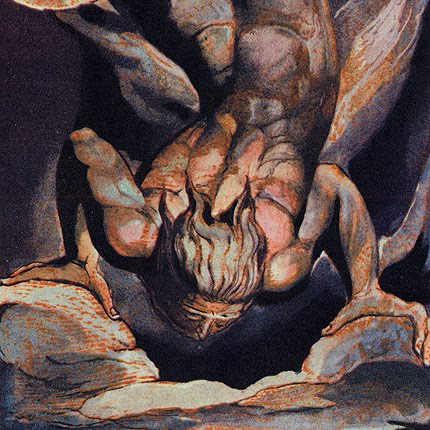
William Blake: The Traditional Perspective

William Blake approached the world with the honesty of a child, the imagination of an artist, and with the vision of a true prophet; he saw light where others could only see darkness, and he could only see emptiness where many others had founded their entire worldview. Having considered a significant portion of his art and corresponding philosophy, and how it contrasts sharply with the ‘ideals’ of his modern world, of our modern world, we can only come to agree with Kathleen Raine when she states that ‘Blake was a traditionalist in a society that had lapsed from tradition’.

Within the many chambers of wisdom that the Vedic legacy has to offer us, there is a particular process by which the initiate may come to know God (or His work), a search of negation that arrives at the treasure it seeks by confirming what is not gold or silver: ‘neti, neti’, he says, stripping away the chaff surrounding a single gemstone. William Blake tore through the excess with a caustic perception until he could bring the principles he sought into a clear and definite form; even physically, in the way that he engraved, he literally works until something perfect emerges from the base and worthless material. The prophet of London continually shaped, melded, gilded his perception to the point where it fully accorded with a vast and surprisingly comprehensive ‘system’ that adulates internalized beauty, and that scorns the ugly exterior of a fallen, materialized world.

If we were to define ‘humanism’ as the belief that man and his own reason, both empirical and rational, is self-sufficient without the existential need for a higher Intellect beyond immediate comprehension, it would be quite foolish indeed to assert that Blake is infact a humanist.  We would be similarly mistaken, however, if we were to ignore the particularly ‘anthropocentric’ aspect of his vision. Humanity is the greatest of all creation; all nature is subject to our intellect, our sense of order, for humanity is the only created thing gifted with a spirit that transcends mere animal instinct. Jesus Christ is the normative and quintessential man: he is the self-actualized mediator, the immortal bridge between humanity and divinity. So Blake reminds us of our position in the scholastic ‘chain of being’, and yet he undoubtedly entrenches himself in the firmly human point of view, organizing all reality from the perception of a fixed personal psyche.

Situated on the climactic battlefield of ‘mental warfare’, Blake’s ‘Devils’ are arrayed against the ‘Angels’ of the modern world, an irreconcilable duality that persists throughout all time and space. Like countless other men of his virtue, Blake understood himself to be physically alone in a titanic war against the very architects of modernity; and this feeling of utmost solitude (not loneliness) drove his vision to ever greater heights, far beyond the sterile reasoning of Locke, Bacon, and Newton, or ‘Satans Watchfiends’. Blake’s fiery imagination sprung new life with every glimpse of Golgonooza, with every artistic definition of a ‘Minute Particular’. William Blake belongs to the select few minds of genius who have mastered the ‘art of mythology’, or the act of bringing an abstract divinity into a tangible, symbolic, and meaningful representation that is not only comprehensible to the wise man of his age, but is utterly profound and wonderfully resonant to the alert and listening spirit, the wise man of every age.

‘Blake was, in spirit, a denizen of other and earlier ages of the world then the present material one to which chance had so rudely transplanted him. It is within the last century or so, that the heavens have gone further off. The supernatural world has during that period removed itself from civilized, cultivated humanity than it ever has before – in all time, heathen, or Christian. There is, at this moment, infinitely less belief in an invisible world, or even an apprehension of it, than at any previous historical era… It is only within the last century and a half, the faculty of seeing visions could have been one to bring a man’s sanity into question. Ever before, by simple-believing Romanist, by reverent awestruck pagan, or in the fervent East, the exceptional power had been accepted as a matter of course in gifted men, and had been turned to serious account in the cause of religion.’ William Hazlitt


Final biographical quotation:


‘(William) died on Sunday night at 6 Oclock in a most glorious manner. He said He was going to that Country he had all His life wished to see & expressed Himself Happy, hoping for Salvation through Jesus Christ – Just before he died His Countenance became fair. His eyes Brighten’d and He burst out Singing of the things he saw in Heaven.’ George Richmond, a friend


Monday, August 9, 2010

Anathema - We're Here Because We're Here

Any fan of Anathema will be quick to tell us what kind of themes that the band like to dwell on: despair, longing, tragedy, fallen romance, etc. etc.; and all of that pretty much dries up with this, Anathema’s eighth full-length. After gradually drifting away from their doom/ death origins in the mid-nineties, this English six-piece have been fairly steady in releasing material steeped heavily in a gloomy atmospheric rock that blends the real-life storytelling of Pink Floyd with a truly melancholic sense of melody that gives this type of music the sincerity it needs. As we are well-acquainted with the relatively unusual history of the band, we were most anxious to hear what they had to offer us this year…


The striking difference in this album is eminent: there is life blooming in every song. While we are typically accustomed to experiencing some dark tragedy that dominates the stage, and thus a deep inclination towards death, with We’re Here Because We’re Here we are faced with an immediate positivity which is at once hopeful and refreshing, and thus we experience a total affirmation of life. Metaphorically speaking, this music is like a rejuvenating ray of sunlight beaming through a crack in the cave of some tormented, forgotten hermit.

The most important part of this endeavour is, evidently, the vocal and lyrical aspect; it is the clearest passage through which this seminal message is conveyed. Vincent Cavanagh’s vocals are more ethereal than ever before; singing in a lucid, almost faint tone, his voice is furnished with an emotive conviction that provides the music with depth and authenticity. Lyrically, this band is exploring entirely new territory: we are no longer mourning the untimely loss of a loved one, and nor are we bemoaning the seeming vacuity of existence; instead, we are ripping off Burzum lyrics! Remember ‘suddenly, life has new meaning’? Anathema mimics it to perfection, but with a much different intention: while Burzum seems to derive meaning from unearthing some secret truth from beneath the soil, behind the darkness, Anathema is struck by a revelatory flash of light, where the meaning found is truly sudden. The rest of the album follows the same course: heavenward, entrusted with this new strength of faith and courage.

As important as the vocal and lyrical aspect in this album is, in this kind of band, it still does not really detract from the necessity of rhythm and melody. The rhythm section masters its role dutifully, leaving the guitar work to excel in the art of crafting the appropriate melodies, something which is even more important in a band that deems the demonstration of pathos as so critically essential. A key feature of this record is how the music slowly builds into a powerful atmosphere before pouring out into a perfectly indulgent climax; this is primarily achieved by perseverance in melody, where the guitar lines consistently follow the vocal lines toward that certain pitch that completes the movement and falls off into the next. Simply stated, the guitar work is successful in creating the right mood and impression which is precisely the equivalent of the lyrics: sunny, golden, and brimming with hope. 

The basis, the very core of We’re Here Because We’re Here is quite easy to define due to the simplicity of the lyrics and the corresponding lyrics; but what’s not so easy to define is how to place this album in the context of its predecessors. It could plainly be the fulfillment of the broken wanderer who, having endured the wild tragedies of reality, has at last returned to the sunlit estates of his father, but perhaps not. Whatever the context, it is patently clear that we have been made witness to an album that focuses not on the empty yearnings of the fallen and bitter mind, but on the spirited campaign of an embattled soul, a campaign that finally leads him to a land of peace, the land of his father. 


I've found my way to fly free from the constraints of time
I have soared through the sky, seen life far below in mind;
breathed in truth, love, serene, sailed on oceans of belief;

searched and found life inside, we're not just a moment in time...


Thursday, July 29, 2010

Golgonooza

‘The Vegetative Universe. Opens like a flower from the earths center:
In which is Eternity. It expands in Stars to the Mundane Shell
And there it meets Eternity again, both within and without,
And the abstract Voids between the Stars are the Satanic Wheels.’ ~ Jerusalem


The city of Golgonooza is where Blake really meets Plotinus, Leibniz, and anyone else who posits eternity as an inherently internal perception, something that begins with an inner identity blossoming out into a vast network of identities that are nonetheless finite and thereby inferior to the singular original identity. Blake’s charge, then, which is once again aligned with that of Platonism, is to rediscover, or more importantly, to recreate that inner One, that comprehensive monad which inevitably leads to the All.

It is the method that Blake utilizes which ultimately separates him from prior philosophers, if only in appearance. From Vedanta to the Stoics, from the Christ to Gnosticism, we gather a more or less unified declaration to know thyself; Blake is slightly more practical than most, offering a very general means to this epistemological end. If every man is some kind of artist, as we have learned, than it certainly behooves us to discern the precise nature of our particular artistry, for therein lies the essential man.

No work of art is ever wasted, never neglected in the grand scheme of things; rather, it is dutifully collected in the city of Golgonooza, where art is the wood, brick and stone used to build everything. So, where we increasingly identify with our inner, artistic selves, we are also building Golgonooza; in this way can Blake ingeniously merge the individual aspect into the collective entirety in a kind of karmic scale which allots to every man what is properly his. This concept really epitomizes what Blake tries to accomplish on the metaphysical level, which is, namely, to subsume the merits of the individual into the integral framework of the greater whole.

‘And every part of the City if fourfold; & every inhabitant fourfold.
And every pot & vessel & garment & utensil of the houses,
And every house, fourfold…’ ~ Jerusalem


The city of Golgonooza is characterized by the ‘fourfold’ nature of its constituents, which of course means the perfection, the completion of the city; it is what the Prophets have called ‘New Jerusalem’, the place where the fallen world finally returns to its proto-Eden state. Now, this not only corroborates the view that Golgonooza is a figurative ‘ideality’, a heaven of sorts, but it also contributes to the position that such a supposedly fantastic realm is actually possible to conceive of and really ‘live’ in whilst enduring our present state of mortality.

We once more return to the notion of esse est percipi: God makes Himself immediately clear to the seeking individual, whose reality is now founded on this vision of God, which inexorably manifests itself in some shape or form based on art, which makes its return to divinity via the golden streets of Golgonooza. This is a theoretically necessary cycle that is distinctly paralleled to the cosmic paths of mankind once he has awakened himself from the dreary, slumberous natural world; and yet it is more than merely theoretical: this vision and this reality is a vigorous and endearing call to arms sent out to any of the old guard still willing to raise themselves to their former godhood, to their old thrones sitting upon eternity.


Tuesday, July 6, 2010

Vision and Art

First of all, Blake thought that any theories of art were ipso facto null and void due to their smallness in the face of the highest species of art; the theory, which intrinsically implies universality, fails to account for the wonderful mystery that the wide array of art can oftentimes produce in the most magical, unpredictable ways. Now, having said so, we will nevertheless endeavour to understand precisely what Blake did think of art from the theoretical point of view which arises from his greater worldview…

The most obvious truth about Blake’s view of art would naturally come from something that we are already aware of, namely, that insofar as our perception of this world is limited, so too will be our artistic accomplishment; the extent of the artist’s spiritual vision dictates the extent of his mastery of the arts. In this way we can see Plato yet again re-appearing, reminding us of the mimetic function, or the impulse to imitate an already imitative object. If the object that we are wishing to demonstrate in poetic or visual representation is already a copy, it behooves us to seek out the original idea residing behind the sensible manifestation, and to portray it symbolically, viz., through the world of symbols that directly indicate the Forms above.

 The vegetative state of our world is a priori an ugly, vicious picture; if we insert our own human imagination, however, our perception becomes a posteriori a beautiful and immortal thing of art. This idea that we visualize through our higher imagination is surely a part of what Plato called the ‘Formal realm’, and it is clearly manifest in Blake’s schema of symbols. Moreover, it must be known that the world of beautiful Forms is not really non-existent prior to its human visualization; it truly is eternal in both the heavenly and mundane aspects of reality, but its recognizance requires the higher human faculties of vision and Intellect to re-create according to his own particular understanding, and therefore become real to him.

In more relevant terms, we can once again succinctly paraphrase the eminent Blake scholar Northrop Frye, who supposes art to be an imaginative ordering of sense experience; furthermore, the dismal, linear attributes of the material itself is actually a hindrance to the artist, who ultimately wishes to untie all of it into a single, united form that contrarily is beautiful and revelatory. To use Frye’s own example, which really is the best possible example, Beethoven’s deafness did not at all affect his imagination; it instead assisted him in his creative efforts! And as for the ontological experience of the artistic endeavour, we will quote Frye himself:

‘The “visionary” is the man who has passed through sight into vision, never the man who has voided seeing, who has never trained himself to see clearly, or who generalizes among his stock of visual memories. If there is a reality beyond our perception, we must increase the power and coherence of our perception, for we shall never reach reality in any other way. If the reality turns out to be infinite, then perception must be infinite too.  To visualize, therefore, is to realize. The artist is par excellence the man who struggles to develop his perception into creation, his sight into vision; and art is a technique of realizing, through an ordering of sense experience by the mind, a higherreality than linear unselected experience or a second-hand evocation of it can give.’~ Northrop Frye


Although Frye is presumably speaking of the specifically artistic evolution in this passage, it clearly has wider implications, perhaps inclusive of all men. This normal imperative for the true artist is not exclusive to the artist of the plastic arts, or of music and lyric, but to all humanity. This idea is exemplified in the Laocoon aphorisms, where Blake says, ‘A Poet, or a Painter, a Musician, an Architect; the Man or Woman who is not one of these is not a Christian. You must leave Fathers & Mothers & Houses & Lands if they stand in the way of Art. Fasting & c. all relate to Art. Prayer is the study of Art. Praise is the Practise of Art.’ So every person is conceivably an artist in his own way, and therefore this dramatic undertaking of converting vegetative sight into real, imaginative vision applies to every human being.

Now that we know the ideal of any serious artist, what might the outcome actually appear as; for doubtless something that imitates divinity instead of physicality must be substantially different.

‘The great and golden rule of art, as well as of life, is this: That the more distinct, sharp and wirey the bounding line, the more perfect the work of art, and the less keen and sharp, the greater is the evidence of weak imitation, plagiarism, and bungling…’ Descriptive Catalogue


This obviously corresponds to Blake’s collective metaphysic, that of definite identities properly integrated into the all-subsuming humanity. Blake furthermore states in his marginal notes on Reynolds, ‘Demonstration, Similitude & harmony are Objects of Reasoning. Invention, Identity & Melody are Objects of Intuition. Thus, the more mathematical tools of art are found to be inferior to the more ‘intuitive’ insights, which cannot be measured quantitatively but can be measured qualitatively.

So we have discovered that Blake does not really have a ‘theory of art’ at all; or, rather, that his overall philosophical perception includes a description of artthat extends the artistic process ina  way conducive to his most immediate goal, viz., the apocalypse of self,the empowerment of sensual seeing into perceptive vision. Therefore, art itself is no longer too ‘comprehensive’ for any theory about it, but certainly becomes part of an epistemological system that actually absorbs the art complex, as well as every aspect of ‘real living’ that could possibly be endorsed by Blake’s idealistic objective. We conclude this section with another pertinent quotation from Mr. Frye…

‘All art is vigorous and controlled line-drawing: painting is drawing on canvas; engraving is drawn on copper; music is drawn on sound: whatever the medium, the imaginative impulse to conquer it is the same. All bad art fumbles, hesitates, and breaks up the line: all bad art has the disease of what Blake called “blotting and blurring”’~ Northrop Frye